
Equitable Medicaid and Clinical Research (EMCR) is developing artificial intelligence (AI) solutions to improve healthcare delivery, support early disease detection, and expand access to medical services for people living in rural and underserved communities across Nigeria.
For many families, accessing healthcare remains a daily struggle. Long distances to health facilities, shortages of medical professionals, and the cost of treatment can prevent people from receiving timely medical attention. EMCR believes that responsible use of artificial intelligence can help reduce some of these barriers and bring healthcare services closer to those who need them most.
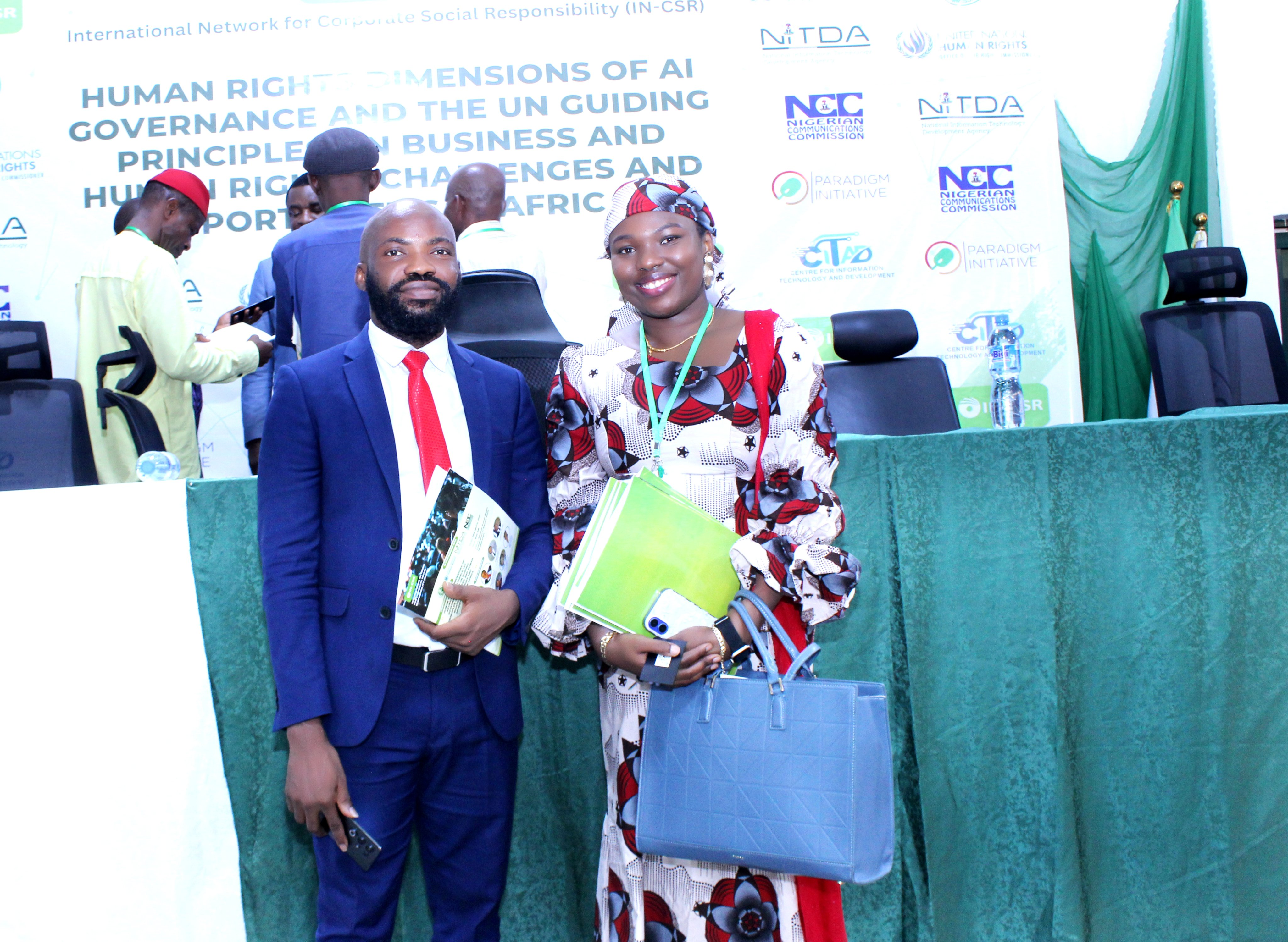
On March 20, 2025, a workshop titled “Human Rights Dimensions of Artificial Intelligence and United Nations Guiding Principles on Business and Human Rights: Challenges and Opportunities in Africa” was held at the National Human Rights Commission Headquarters in Abuja.
The workshop was organised by the International Network for Corporate Social Responsibility in partnership with Paradigm Initiative (PIN), the United Nations Working Group on Business and Human Rights (Switzerland), the National Human Rights Commission of Nigeria (NHRC), the National Information Technology Development Agency (NITDA), and the Nigerian Communications Commission (NCC).
The discussions explored the relationship between artificial intelligence, human rights, and responsible technology development, with attention to the opportunities and risks associated with the growing use of AI across Africa.
Turning Workshop Discussions into Practical Healthcare Solutions
The issues raised during the workshop reflect the challenges EMCR is working to solve through technology. While discussions about responsible AI development are important, EMCR believes these principles must also guide the design and use of healthcare technologies that serve real people.
One example is Correct Moms, an AI-powered maternal health platform developed by EMCR to support women and girls with reproductive health information, pregnancy risk detection, health reminders, and access to healthcare professionals.
The platform brings together artificial intelligence and professional medical support to help women recognise potential health risks, seek timely medical attention, and access healthcare information, including in communities where medical services are limited.
In developing Correct Moms and other healthcare technologies, EMCR is working to place patient safety, data privacy, fairness, and human oversight at the centre of its work. The goal is not to replace healthcare professionals with artificial intelligence but to provide tools that can assist them in delivering timely and informed care.
These efforts reflect a practical connection between the human rights principles discussed at the workshop and the development of technology intended to improve access to healthcare.
As artificial intelligence becomes more widely used in healthcare, questions surrounding patient privacy, data protection, discrimination, accountability, and equal access to technology remain important.
EMCR believes that people living in remote communities, women, children, persons with disabilities, and families experiencing poverty should have fair opportunities to benefit from advances in healthcare technology.
The workshop highlighted the importance of developing artificial intelligence systems that respect human rights, protect personal information, and serve the public without discrimination.
As EMCR continues developing AI-powered healthcare tools, its focus remains on making healthcare more accessible, affordable, and responsive to the needs of underserved populations.
For EMCR, responsible artificial intelligence is not just a subject for discussion. It is a principle that should guide the development of healthcare technologies that protect human dignity, support medical professionals, and help save lives.
Photo stories
Related

Climbing for a Cause: EMCR Raises TB Awareness Through Mountain Hike
 Watch video: