
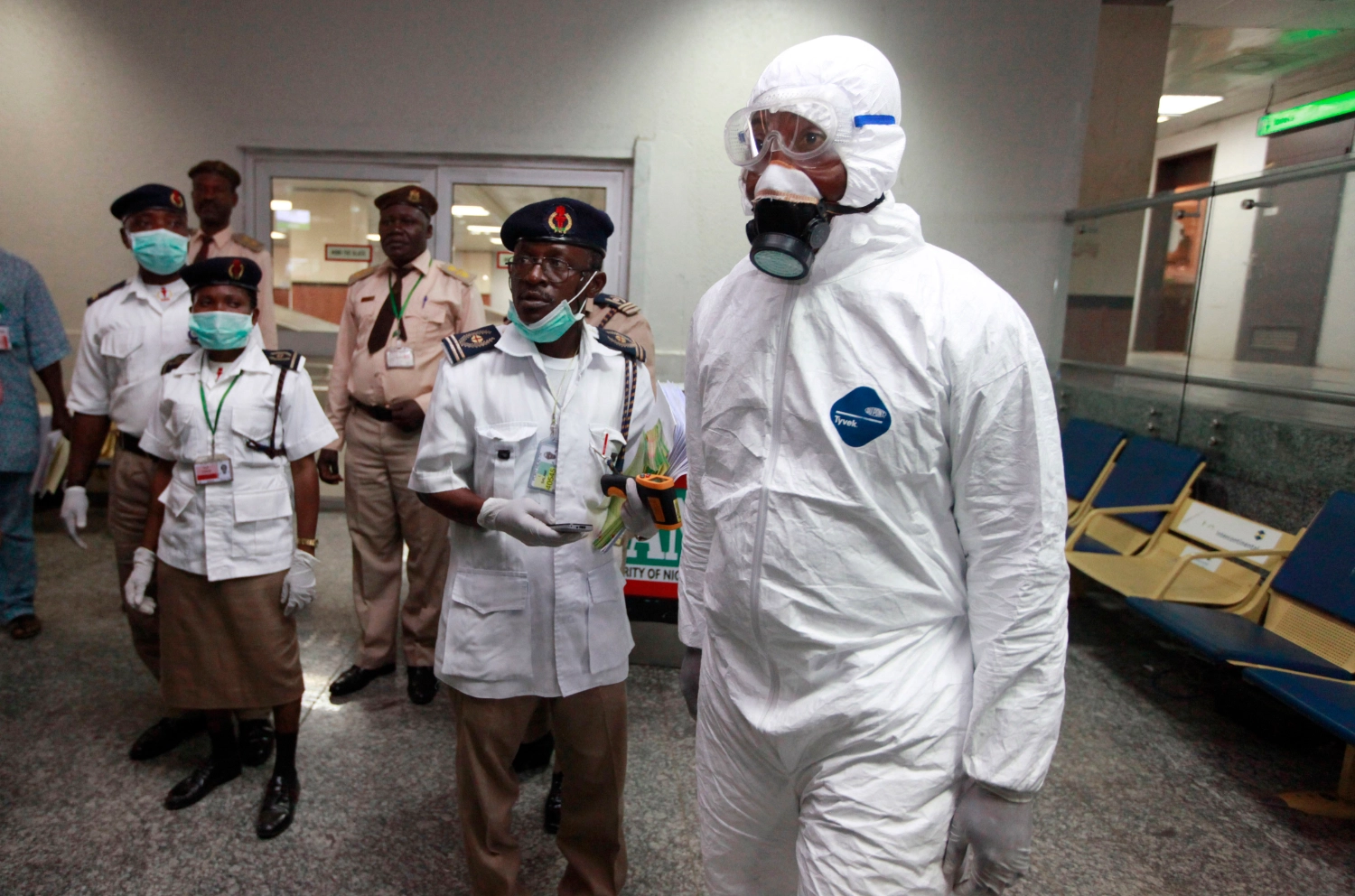
Muhammed International Airport in Lagos Photo Credit: AP/ Sunday Alamba
Nigeria is facing renewed public health concerns following the confirmation of an imported Ebola virus disease case in Abuja, the Federal Capital Territory (FCT), on 20 October 2026. The development has raised concerns about the country's preparedness to prevent further infections, protect healthcare workers, and safeguard people living in overcrowded communities and internally displaced persons (IDP) camps.
The Federal Ministry of Health and Social Welfare confirmed that the patient, a woman who recently travelled from Uganda, tested positive for Ebola following laboratory investigations. The World Health Organization (WHO) subsequently identified the infection as the Bundibugyo strain, which is responsible for an ongoing outbreak in the Democratic Republic of the Congo (DRC).
According to WHO, the woman developed symptoms on 7 October, four days after arriving in Nigeria, and sought medical attention at a private healthcare facility in Abuja on 11 October. Her infection was confirmed on 20 October, and she was placed in isolation for medical care.
Health authorities have identified 44 people who may have been exposed to the patient, including healthcare workers, caregivers, other patients, and travel contacts. The Nigeria Centre for Disease Control and Prevention (NCDC) has activated its incident management system, while contact tracing, surveillance, and infection prevention measures are underway.
The confirmation comes as Ebola continues to spread across parts of Africa. The Democratic Republic of the Congo has recorded more than 9,500 confirmed infections and 4,600 deaths as of 18 October 2026, while Kenya has also reported cases linked to the regional outbreak.
For Equitable Medicaid and Clinical Research (EMCR), the situation draws attention to the need for early detection, public education, accessible healthcare services, and stronger disease surveillance, including in communities where access to medical care remains limited.
Internally displaced families are among the populations requiring careful consideration in public health preparedness. Many displaced people live in crowded shelters where access to clean water, sanitation facilities, protective equipment, and timely medical services may be inadequate.
Although no Ebola infection has been confirmed in Nigeria's IDP camps in the reports reviewed, an undetected case in a crowded settlement could create serious challenges for disease containment, particularly where health facilities are difficult to reach.
Ebola spreads through direct contact with the blood or other bodily fluids of an infected person who is symptomatic, or through contaminated materials. It is not generally transmitted through ordinary airborne exposure, and casual proximity alone does not establish infection.
Symptoms may include fever, severe weakness, headache, muscle pain, vomiting, and diarrhoea. Anyone with possible exposure should contact public health authorities promptly rather than waiting for symptoms to worsen.
The latest case has also brought back memories of Nigeria's 2014 Ebola emergency, when the country contained transmission through coordinated surveillance, isolation, contact tracing, and public health action. That experience provides a foundation for responding to the present threat.
However, WHO has cautioned that one imported case does not, on its own, mean Nigeria is experiencing a wider Ebola outbreak. No community transmission has been established in the information reviewed.
EMCR believes that preventing the spread of Ebola requires attention to people who may struggle to access healthcare, including displaced families, low-income households, rural residents, and frontline health workers.
Community health education, access to handwashing facilities, prompt referral of suspected cases, and adequate personal protective equipment for medical personnel can help reduce the risk of transmission.
Healthcare facilities must also maintain strict infection prevention procedures and report suspected cases without delay.
As investigations continue, EMCR encourages Nigerians to rely on verified information from the NCDC, WHO, and relevant health authorities rather than circulating unconfirmed reports that may create unnecessary fear.
Members of the public who suspect Ebola exposure or develop symptoms following possible contact with an infected person should contact the NCDC through its toll-free line, 6232, for guidance.
The confirmation of Ebola in Abuja is a reminder that infectious diseases can cross international borders, but timely detection and public cooperation can help prevent isolated infections from becoming larger emergencies.
For Nigeria, the immediate priority is to contain the confirmed infection, identify potential exposures, protect medical personnel, and keep communities informed.
Related

Correct Moms Officially Launches AI-Powered Maternal Health Platform in Nigeria
 Watch video:
Join The Big Walk for World Cancer Day: Cancer No Be King!