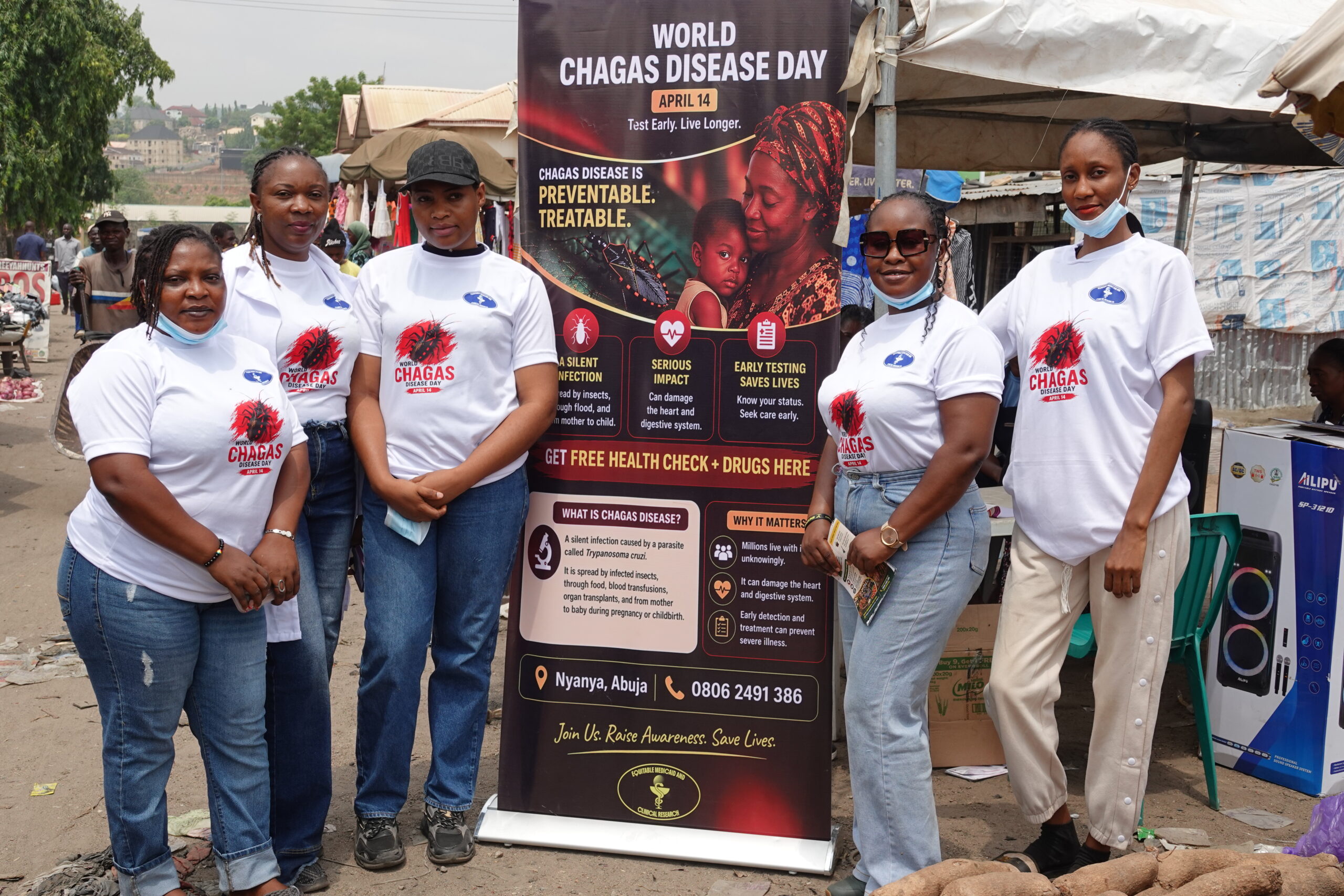

On April 14, Equitable Medicaid and Clinical Research marked World Chagas Disease Day with an awareness outreach at Nyanya Market, a busy suburb in Abuja known for its high daily foot traffic and active trade.
The outreach focused on educating market women and community members about Chagas disease, a condition that remains largely unknown in many communities. Chagas disease is a parasitic infection caused by Trypanosoma cruzi. It can remain in the body for years without noticeable symptoms, quietly affecting vital organs. If left untreated, it may lead to serious heart and digestive complications later in life.
This makes awareness very important, as many people who are infected do not even realize it. The World Health Organization set aside April 14 each year to draw global attention to this disease and to encourage early detection, prevention, and treatment. The day also highlights the need to reach underserved populations who may have little access to health information and care.
At Nyanya Market, the outreach created an opportunity for direct engagement with women who play key roles in their households and communities. Through simple and easy-to-understand health talks, participants learned how the disease spreads, signs to watch for, and steps they can take to protect themselves and their families. Many of the women had never heard of Chagas disease before, which made the session both eye-opening and interactive.
To support the awareness effort, 500 printed flyers were distributed. These materials explained the early signs of the disease, common risk factors, and practical safety measures in a format that was easy to understand and share with others.
Beyond education, the outreach also included basic health services to meet immediate needs. Free blood sugar testing and malaria screening were carried out on-site. A total of 98 women were screened for blood sugar levels, helping to identify possible cases that may require further medical attention. In addition, 116 individuals were tested for malaria.
Those who tested positive for malaria received a full dose of malaria medication immediately. This ensured that participants not only received information but also direct care where needed. The inclusion of these services helped increase participation and made the outreach more meaningful to the community.
In total, over 500 women were reached through this activity. The combination of education and on-the-spot health services created a strong connection with the community and encouraged open conversations about health concerns that are often ignored.